
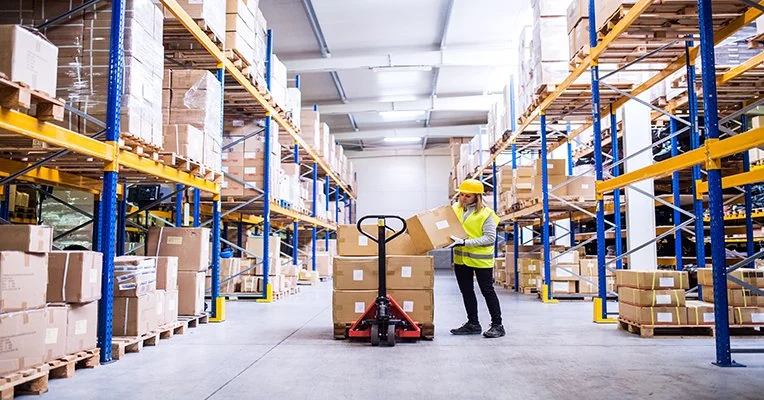

Outsourcing fulfillment to a third-party logistics provider is one of the smartest early decisions a growing brand can make. In the early stages, flexibility trumps margin optimization. A 3PL allows an emerging company to scale without committing to long-term commercial leases, capital-intensive racking systems, or a dedicated warehouse payroll. You pay for what you use, scale up during seasonal peaks, and focus internal energy on product development, marketing, and customer acquisition.
Eventually, success introduces a different set of financial realities. As monthly order volumes climb into the thousands and pallet counts expand across multiple facilities, the variable cost structure that once protected your balance sheet begins to erode your gross margins. What was once an asset becomes an expensive line item loaded with storage surcharges, pick-and-pack escalations, and administrative fees.
Bringing fulfillment under your own roof represents a major operational leap, but it is fundamentally a financial calculation. Knowing when to make that move requires stripping away emotional attachments to operational control and evaluating the hard numbers behind facilities, labor, technology, and carrier agreements.
The Tipping Point: Shifting from Variable to Fixed Cost Economics
The fundamental tension between outsourced fulfillment and self-warehousing lies in how costs behave as order volume grows. A 3PL operates on a variable cost model. Every single order that moves through their doors incurs individual charges: a base pick fee, an additional item fee, a packaging fee, and often a postage markup. If your business doubles its sales, your fulfillment invoice doubles right alongside it.
In-house warehousing, by contrast, operates primarily on a fixed cost model. Your commercial lease, facility insurance, warehouse management software licenses, and core management team cost roughly the same amount whether you process five thousand orders a month or twenty-five thousand.
The economic tipping point occurs at the intersection where your aggregate monthly 3PL invoices consistently exceed the combined total of facility overhead, operational equipment, warehouse labor, and direct freight expenses. For many consumer goods companies, this threshold surfaces somewhere between 8,000 and 15,000 orders per month, though high-SKU operations or businesses with significant dimensional weight profiles often hit this inflection point much earlier. At this volume, trading variable operational costs for fixed overhead produces massive unit-level margin expansion.
Unpacking the Hidden Line Items on Your 3PL Invoice
Calculating whether an in-house operation is cheaper starts with an honest audit of your current 3PL billing statements. Most merchants underestimate what they actually pay per order because modern 3PL invoices are fragmented into dozens of micro-charges.
To benchmark your true fulfillment cost per unit, you must account for several easily overlooked line items:
-
Inbound receiving charges: Fees assessed for container unloading, pallet breakdown, barcode verification, and initial system entry.
-
Storage premiums: Tiered charges per pallet, shelf, or bin position that escalate sharply during peak Q4 inventory builds.
-
Ancillary handling fees: Surcharges for box inserts, tissue wrapping, promotional stickers, custom taping, and barcode relabeling.
-
Return processing penalties: Complex billing structures for receiving, inspecting, restocking, or disposing of returned goods.
-
Account administration fees: Monthly platform access costs, customer service minimums, and integration maintenance fees.
When you divide your total monthly invoice—excluding direct postage costs—by your total shipped order volume, the true handling cost per order is often 20% to 40% higher than the headline pick-and-pack rate listed in your master services agreement. This real-world baseline provides the target your internal warehouse must beat.
Building the In-House Balance Sheet: Direct and Indirect Costs
Projecting the cost of running a proprietary warehouse requires building an unvarnished pro forma model that covers both capital expenditures and ongoing operational expenses. Underestimating these line items is the most common reason internal transitions experience initial margin compression.
Facility and Physical Infrastructure
Real estate commitments require substantial capital up front. Most industrial landlords require long-term commitments under triple-net leases, where your business pays base rent plus property taxes, building insurance, and structural maintenance.
Beyond square footage, you must fund physical outfitting. Pallet racking, flow racks, packing benches, industrial scales, label printers, and heavy equipment represent substantial day-one investments. A reliable electric forklift, whether leased or purchased outright, carries recurring maintenance, battery charging infrastructure, and safety inspection overhead. You must also budget for commercial utilities, specialized waste management for discarded corrugated cardboard, and enhanced commercial property insurance.
Labor and Human Capital
Labor is almost always the single largest operational expense inside an independent fulfillment center. A proper financial model must capture far more than hourly wages.
Your calculations must incorporate payroll taxes, workers’ compensation insurance—which carries higher classification rates in warehouse environments—health benefits, and recruiting costs. Furthermore, building an efficient floor team requires seasoned leadership. You cannot run an efficient distribution center with temporary staff alone; you need an experienced warehouse manager who understands slotting optimization, pick-path efficiency, and inventory variance control. During volume surges, you will face overtime premiums or the elevated hourly rates of temporary staffing agencies.
Technology Stack and Systems Integration
A modern warehouse cannot function reliably on paper pick lists or basic inventory spreadsheets. To match or exceed the accuracy of an established 3PL, you must invest in an enterprise-grade Warehouse Management System.
Factor in upfront implementation fees, ongoing software-as-a-service subscriptions, API connector maintenance, and mobile barcode scanning hardware for your floor pickers. Automated dimensioners and print-and-apply labeling stations also require capital, but they quickly pay for themselves by eliminating manual data entry and preventing carrier billing adjustments.
The Parcel Rate Reality Check: Negotiating Direct Carrier Contracts
Shipping postage represents the great equalizer in fulfillment economics, and it is the area where transition models most frequently fall short.
Large 3PLs ship tens of millions of packages annually. That massive aggregate volume allows them to negotiate top-tier parcel discounts with national carriers like FedEx, UPS, and DHL. When you operate inside their network, you typically inherit those steep base discounts, even after the 3PL applies a modest handling margin.
When you transition in-house, you must negotiate your own carrier contracts based solely on your individual shipping profile. If your annual shipping spend is modest, your direct carrier rates may be significantly higher than what you paid through your 3PL, particularly on long-zone shipments or packages subject to heavy dimensional weight penalties.
Before finalizing any facility lease, secure preliminary contract proposals from major carriers and regional parcel delivery networks. Run your historical shipping manifest through these proposed rate cards. If your postage costs increase by seventy-five cents per package on an internal contract, that difference can wipe out the savings gained from cheaper storage and lower handling labor.
When SKU Complexity and Control Justify the Capital Expenditure
Not every reason to transition to an internal warehouse shows up cleanly on a financial spreadsheet. Some of the most compelling mathematical arguments for leaving a 3PL stem from error reduction, brand preservation, and reverse logistics efficiency.
Standard 3PL facilities rely on standardized, high-speed workflows designed for uniformity. If your product line involves intricate kitting, high SKU volatility, serialized tracking, fragile assembly, or distinct luxury packaging, external warehouse workers will struggle to meet your quality standards. A 1% mispick rate might seem acceptable to a third-party facility manager, but to your business, that mistake triggers customer service overhead, replacement product costs, duplicate outbound shipping charges, and lost lifetime customer value.
Reverse logistics is another critical profit center that standard 3PLs manage poorly. Returns sent to outsourced facilities frequently sit on receiving docks for weeks before being processed. In an internal warehouse, your own team can inspect returned items immediately, refurbish viable stock, restock inventory while seasonal demand is still active, and significantly reduce inventory write-offs. When you manage your own inventory, you gain complete visibility over shrinkage, damage, and stock accuracy.
A Practical Framework for Calculating Your Break-Even Horizon
To determine whether the numbers justify taking the leap, compare your fully loaded costs over a rolling thirty-six-month horizon using a simple comparative framework.
-
Calculate current annual 3PL expenses: Sum your historical storage fees, handling charges, inbound receiving bills, and service markups over the last twelve months, then adjust for your projected order growth over the next three years.
-
Model your annual internal operating expenses: Combine your proposed facility rent, operating costs, utilities, total labor overhead, software subscriptions, equipment leases, and supplies.
-
Layer in your revised parcel shipping expenses: Add your realistic, negotiated direct carrier rates based on your specific weight and zone distribution.
-
Account for one-time transition capital expenditures: Include racking, initial equipment purchases, software onboarding, security systems, facility legal fees, and the temporary duplicate costs of moving inventory between warehouses.
If the internal model demonstrates a payback period on your initial capital investment within eighteen to twenty-four months while maintaining or lowering your total cost per order, the math clearly supports the transition. If the break-even horizon stretches past thirty-six months, your business is likely better served remaining with an outsourced provider while focusing working capital on revenue-generating initiatives.
Strategic Alternatives Before Signing a Long-Term Lease
If your analysis suggests you are right on the edge of viability, you do not have to jump directly from a standard 3PL contract into a ten-year commercial lease. Several intermediate operational strategies can bridge the gap.
One viable stepping stone is co-warehousing, where you lease flexible industrial space with shared loading docks, material handling equipment, and enterprise internet. This arrangement eliminates heavy capital expenditures on physical equipment while giving your own staff direct control over fulfillment, packing, and quality standards.
Another proven path is the hybrid distribution model. Under this framework, you manage your primary fulfillment hub in-house near your highest concentration of domestic customers, while retaining a regional 3PL partner on the opposite coast to handle long-distance zone coverage. This structure keeps core operations and high-touch workflows under your direct supervision without requiring you to lease, staff, and manage multiple industrial properties simultaneously.
Transitioning fulfillment in-house is ultimately an investment in operational capability. When executed at the right volume threshold and with a clear-eyed accounting of fixed costs, taking control of your warehouse turns fulfillment from an escalating expense into a durable competitive advantage.
Comments are closed.